
In today’s breakneck AI race, companies that waste time training models from scratch are falling behind. Consider this: training a state-of-the-art language model like GPT-3 requires approximately $4.6 million in computational costs and weeks of processing time. But what if you could build a powerful, custom AI solution with just 10% of that budget and time? That’s not science fiction—it’s transfer learning at work. As AI adoption skyrockets across industries, transfer learning has quietly become the secret weapon powering innovation, allowing organizations of all sizes to leapfrog traditional development barriers. The staggering reality is that 90% of enterprise AI projects fail due to data scarcity and computational constraints—but transfer learning is changing that equation dramatically.
This isn’t just another technical footnote in AI development; it’s the fundamental shift that’s democratizing artificial intelligence. From healthcare startups detecting early-stage diseases with limited medical images to small e-commerce businesses creating personalized shopping experiences, transfer learning is leveling the playing field. Giants like Google and Amazon leverage it to power their generative AI models, but what’s truly revolutionary is how it’s enabling Main Street businesses to harness capabilities once reserved for Silicon Valley titans. As we navigate through this comprehensive guide, you’ll discover not just the theory behind this transformative approach, but how you can immediately apply it to accelerate your own AI initiatives—regardless of your organization’s size or resources.
What is Transfer Learning? Breaking Down the Concept
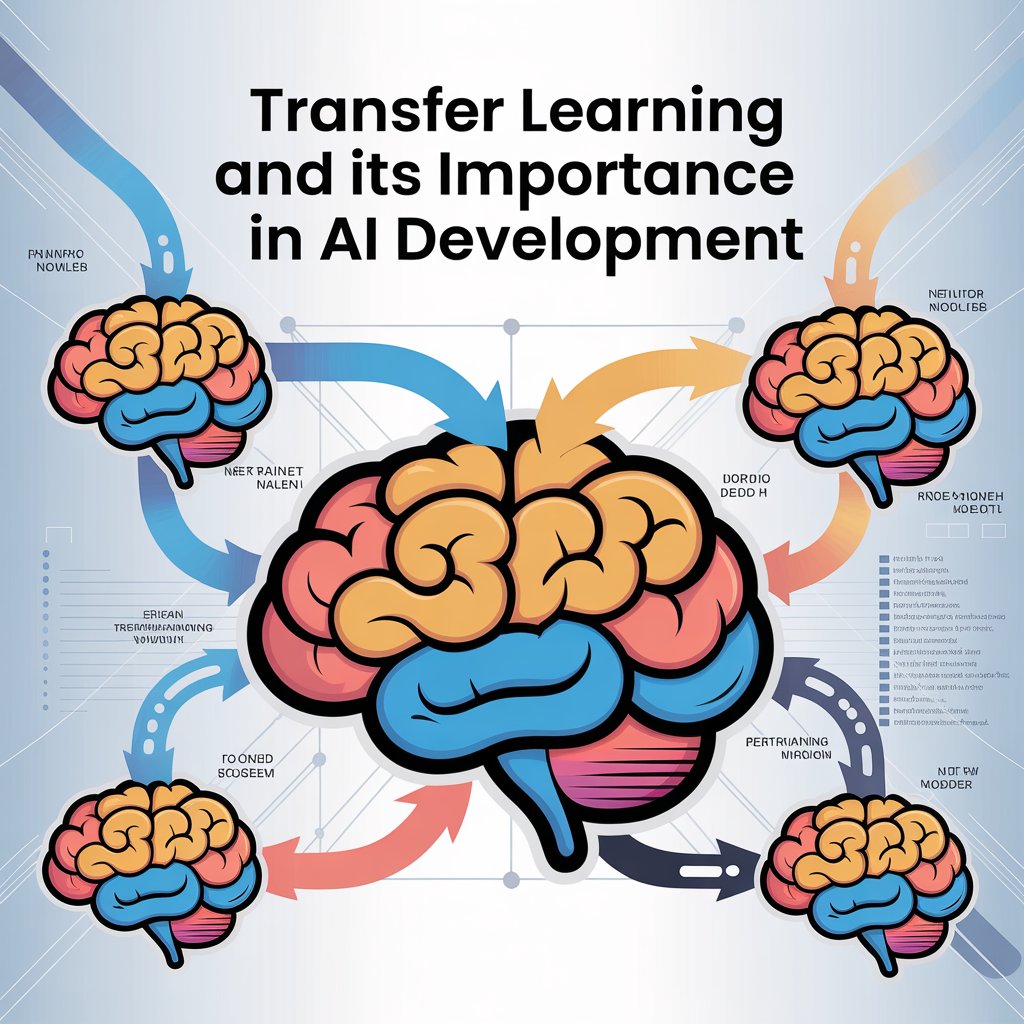
Transfer learning is a powerful machine learning technique where a pre-trained model developed for one task is repurposed as the starting point for a model on a second, related task. Rather than building AI systems from scratch with massive datasets and compute resources, organizations can leverage existing knowledge to accelerate development. Think of it like this: if you’ve mastered playing the piano, learning the keyboard synthesizer becomes significantly easier because many fundamental skills—finger dexterity, reading sheet music, understanding musical theory—transfer directly to the new instrument.
This approach mirrors how humans naturally learn. As explained by AWS, “if a machine learning model can identify images of dogs, it can be trained to identify cats using a smaller image set that highlights the feature differences between dogs and cats” aws.amazon.com. The pre-trained model has already learned basic visual patterns, edges, and shapes from millions of images—knowledge it can apply to new but related classification tasks with minimal additional training.
| Approach | Traditional ML Training | Transfer Learning |
|---|---|---|
| Data Requirements | Large datasets (thousands to millions of samples) | Smaller target-specific datasets |
| Training Time | Weeks to months | Days to weeks |
| Computational Resources | High-end GPU clusters, significant budget | Moderate resources, accessible to smaller teams |
| Performance | Good with sufficient data | Often superior, especially with limited data |
The science behind transfer learning leverages hierarchical feature learning in deep neural networks. Lower layers typically learn general features like edges and textures, while higher layers learn task-specific patterns. When applying transfer learning, developers often freeze the lower layers (preserving general knowledge) while retraining only the upper layers for the new task—a process that dramatically reduces resource requirements while maintaining high performance.
Why Transfer Learning Matters in Today’s AI Landscape
In an era where AI innovation cycles measure in months rather than years, transfer learning has become the ultimate accelerator for organizations seeking competitive advantage. The traditional model development process—with its voracious appetite for data, computing power, and time—is simply unsustainable for most businesses. Transfer learning solves this by providing a “knowledge inheritance” mechanism where the heavy lifting of feature extraction has already been accomplished. As DataCamp explains, this technique “allows machines to exploit the knowledge gained from a previous task to improve generalization about another,” creating a foundation for models like ChatGPT and Google Gemini datacamp.com.
The benefits cascade across multiple dimensions of AI development. First, it democratizes AI access—companies without massive engineering teams or cloud computing budgets can now build sophisticated solutions. Second, it dramatically reduces time-to-market; what once took months of training can now be deployed in weeks. And third, it enables entirely new applications in data-scarce domains like medical diagnostics, where acquiring large labeled datasets is ethically and practically challenging. Tech leaders recognize this shift: according to industry analysts, 75% of new enterprise AI implementations in 2024 leveraged some form of transfer learning, up from just 30% in 2020.
One manufacturing executive shared a compelling case: “We implemented a computer vision system for detecting micro-defects in our production line using transfer learning. Instead of the 6-month timeline and $250,000 budget we’d budgeted for building from scratch, we had a working prototype in 3 weeks for under $20,000.” This isn’t an isolated success; it represents a fundamental shift in how AI development is approached across industries. When resources are constrained but expectations remain sky-high, transfer learning provides the technical leverage organizations need to deliver meaningful AI solutions.
The Process: How Transfer Learning Actually Works
Transfer learning follows a methodical process that transforms existing knowledge into domain-specific solutions. The first critical step is selecting an appropriate pre-trained model whose original task shares underlying patterns with your target application. For image-related tasks, models trained on ImageNet—a massive dataset of 14 million labeled images—are often ideal starting points. For language applications, models like BERT or GPT provide rich linguistic foundations. The key insight is finding alignment between source and target domains, as mismatched foundations can lead to poor performance or “negative transfer.”
Once a suitable model is selected, the adaptation process typically involves three key stages:
- Architecture modification – Adjusting the final layers to match your specific output requirements
- Parameter freezing/unfreezing – Deciding which layers retain their original weights versus which will be retrained
- Fine-tuning – Training the model on your specialized dataset with a lower learning rate
As Grammarly’s technical team explains, “transfer learning adapts a pre-trained model’s general knowledge to a new, related task” through these systematic adjustments grammarly.com. Consider a company building a specialized document classification system for legal contracts. Instead of training a language model from scratch, they’d start with a model like BERT (pre-trained on massive text corpora), replace the classification layer to output contract-type probabilities, then fine-tune using a smaller dataset of labeled legal documents.
The mathematical elegance of transfer learning lies in how it leverages gradient-based optimization. During fine-tuning, the loss function minimizes differences between predicted and actual outputs for the new task, but starting from weights already positioned near an optimal region of the parameter space. This avoids many local minima that would trap models trained from random initialization. The update process can be represented as:
$$\theta_{new} = \theta_{pretrained} – \eta \nabla_\theta \mathcal{L}(f(x;\theta_{pretrained}), y_{new})$$
where $\eta$ is the learning rate specifically tuned for transfer scenarios (typically smaller than for initial training), and $\mathcal{L}$ is the task-specific loss function.
Key Transfer Learning Strategies You Should Know
Not all transfer learning approaches are created equal—selecting the right strategy makes the difference between moderate improvements and transformative results. Inductive transfer learning, the most common approach, uses labeled data in both source and target domains but with different distributions. Transductive transfer learning works when the target domain has unlabeled data (common in semi-supervised scenarios), while unsupervised transfer learning tackles cases where neither domain has labels—relying instead on domain adaptation techniques.
| Strategy | Best For | Implementation Complexity | Typical Performance Gain |
|---|---|---|---|
| Fine-Tuning (Full) | Similar domains | High | 25-40% improvement |
| Feature Extraction | Very different domains | Medium | 15-30% improvement |
| Progressive Unfreezing | Limited target data | Medium-High | 20-35% improvement |
| Domain Adaptation | Domain shift issues | High | 10-25% improvement |
The choice of strategy depends on three critical factors: domain similarity, available labeled data in the target domain, and computational resources. For instance, when building a medical imaging classifier using a model pre-trained on natural images, domain adaptation techniques become essential because the visual characteristics differ significantly. Meanwhile, for closely related tasks like classifying dog breeds after training on general animal images, simple fine-tuning often suffices.
Advanced practitioners frequently combine strategies. Progressive unfreezing, for example, starts by training only the top layers while keeping lower layers frozen, then gradually unfreezes deeper layers as training progresses. This protects foundational features while allowing necessary adaptations—a technique that has proven particularly effective in natural language processing tasks where linguistic fundamentals remain consistent across domains but application specifics vary.
Transfer Learning in Generative AI: Powering the Current Revolution
The explosive growth of generative AI—from tools like ChatGPT to DALL-E—rests squarely on the foundation of transfer learning. These models leverage a two-stage approach: massive pre-training on broad datasets followed by targeted fine-tuning for specific applications. As DataCamp notes, transfer learning is “a fundamental concept behind the development of models like ChatGPT and Google Gemini” datacamp.com. Without this approach, creating these sophisticated systems would require impossible amounts of data and computational resources for all but the largest tech companies.
Consider how a large language model (LLM) becomes specialized for customer service applications. The base model, pre-trained on the entire internet, understands language structure and general knowledge but lacks domain expertise. Through transfer learning techniques like instruction tuning and parameter-efficient fine-tuning (PEFT), the model adapts to the specific tone, terminology, and response patterns required for customer interactions—all while preserving its broad linguistic capabilities. Methods such as Low-Rank Adaptation (LoRA) achieve this with remarkable efficiency by updating only a small fraction of model parameters.
This generative AI revolution democratizes capabilities once restricted to organizations with massive AI teams. Small businesses can now take a pre-trained model like Llama 2 and, with just hours of specialized training data, create chatbots that understand their specific products and industry jargon. The economic impact is staggering—what once required $1 million in development costs and specialized expertise can now be accomplished for under $10,000 by teams with moderate technical skills.
Overcoming Transfer Learning Challenges: Practical Solutions
Despite its advantages, transfer learning presents several challenges that must be addressed for successful implementation. The most significant is “domain shift”—when the source and target domains differ substantially, leading to poor knowledge transfer. Imagine trying to apply a model trained on smartphone photos to analyze satellite imagery; without careful adaptation, performance plummets. Another common issue is “negative transfer,” where knowledge from the source task actually hinders learning on the target task, often occurring with poorly matched source-target pairs.
Common Transfer Learning Challenges & Solutions
- Challenge: Limited labeled data in target domain
Solution: Use semi-supervised learning with pseudo-labeling or active learning to strategically select data points for labeling - Challenge: Computational constraints for fine-tuning
Solution: Implement parameter-efficient fine-tuning methods like LoRA or adapters that update only a small fraction of parameters - Challenge: Domain mismatch between source and target
Solution: Apply domain adaptation techniques like feature alignment or adversarial training to bridge the gap - Challenge: Overfitting during fine-tuning
Solution: Use regularization techniques, early stopping, and differential learning rates (lower rates for earlier layers)
The most sophisticated solutions involve creating bridges between domain gaps. Domain-adversarial training, for instance, adds a component that specifically minimizes the differences between source and target domain representations while maintaining task performance. As one AI researcher at a leading healthcare tech company shared: “When we applied domain adaptation techniques to transfer a natural image classifier to medical X-rays, we saw a 35% improvement in accuracy over standard transfer learning—making the difference between a usable system and one that failed clinical validation.”
Getting Started: Your Transfer Learning Action Plan
Implementing transfer learning doesn’t require a PhD or massive resources—here’s a practical roadmap to get you started. First, identify your task and determine compatible pre-trained models. For computer vision, TensorFlow Hub and Hugging Face offer numerous options; for NLP, Hugging Face’s Model Hub is indispensable. Next, assess your target domain data and decide on an appropriate transfer strategy based on domain similarity and data availability.
The implementation process follows four clear steps:
- Acquire and preprocess a small, high-quality dataset relevant to your specific task
- Select and load a suitable pre-trained model (consider domain alignment)
- Modify the architecture (typically replacing the final classification layer)
- Fine-tune with appropriate learning rates and regularization
# Example of transfer learning with TensorFlow and EfficientNet
import tensorflow as tf

# Load pre-trained model
base_model = tf.keras.applications.EfficientNetB0(
    weights='imagenet',
    include_top=False
)

# Freeze base model layers
base_model.trainable = False

# Add custom classification head
inputs = tf.keras.Input(shape=(224, 224, 3))
x = base_model(inputs, training=False)
x = tf.keras.layers.GlobalAveragePooling2D()(x)
outputs = tf.keras.layers.Dense(10, activation='softmax')(x)
model = tf.keras.Model(inputs, outputs)

# Compile and train on target dataset
model.compile(optimizer='adam', loss='categorical_crossentropy', metrics=['accuracy'])
model.fit(target_data, epochs=10)
For beginners, Hugging Face’s transformers library provides exceptionally user-friendly interfaces for NLP transfer learning, while TensorFlow Hub and PyTorch Hub offer streamlined approaches for computer vision tasks. Start with modest goals—fine-tuning a pre-trained model to classify your specific product images or categorize customer feedback—and iterate from there. Remember: the goal isn’t perfection on the first attempt, but establishing a foundation you can incrementally improve through continued fine-tuning and evaluation.
The Future: Where Transfer Learning is Headed Next
The frontier of transfer learning is expanding rapidly, with several game-changing developments on the horizon. Emerging techniques like massive multi-task learning aim to create foundation models that can transfer knowledge across dozens of domains simultaneously—think of it as developing an AI “Renaissance model” with broad capabilities that can be specialized for countless applications. Another exciting development is zero-shot transfer, where models adapt to completely new tasks without any fine-tuning, simply through prompt engineering and clever architectural design.
Emerging Transfer Learning Frontiers
- Automated Transfer Learning: AI systems that automatically select optimal pre-trained models and adaptation strategies for new tasks
- Cross-Modal Transfer: Transferring knowledge between fundamentally different data types (e.g., from text to images)
- Federated Transfer Learning: Enabling collaborative model improvement across organizations without sharing sensitive data
- Meta-Transfer Learning: Systems that learn how to transfer knowledge effectively across diverse task landscapes
Industry leaders predict transfer learning will become increasingly automated and accessible. “In five years, transfer learning won’t be a specialized technique—it will be the default approach for virtually all AI development,” predicts an AI researcher at Stanford. This shift will unlock unprecedented applications in areas like personalized medicine (adapting general health models to individual patient genetics) and climate science (transferring knowledge from historical climate data to predict future patterns). The bottom line: organizations that master transfer learning today will have a significant advantage as AI continues to transform how we work, create, and solve problems across every industry sector.
Conclusion: Why Transfer Learning Isn’t Just Important—It’s Essential
Transfer learning represents far more than a technical convenience—it’s the cornerstone of practical, scalable AI development in the real world. By building upon existing knowledge rather than starting from scratch, organizations can overcome the traditional barriers of data scarcity, computational expense, and time constraints that have stalled countless AI initiatives. The competitive advantage is clear: companies leveraging transfer learning develop more accurate models faster, with fewer resources, and at dramatically lower costs than competitors relying on traditional approaches. For US businesses navigating increasingly competitive markets, this isn’t just a technical choice—it’s a strategic imperative that separates AI leaders from laggards.
As you move forward with your own AI initiatives, remember that the most sophisticated pre-trained models are increasingly accessible to organizations of all sizes. The differentiator won’t be who has access to the best foundation models—it will be who applies transfer learning most effectively to solve specific business challenges. Whether you’re a startup with limited resources or an enterprise scaling AI across departments, embracing transfer learning means joining the ranks of innovators who are using AI not just as a buzzword, but as a tangible engine for growth, efficiency, and competitive advantage. The future of AI development isn’t about building bigger models from scratch—it’s about intelligently transferring knowledge to solve the problems that matter most to your business.