

It’s a Tuesday evening in May 2026. You’re standing outside a downtown Phoenix restaurant after dinner, tapping your phone to hail a ride. Within 90 seconds, a sleek white Jaguar I-Pace glides to the curb—no driver visible. The doors unlock automatically as your app confirms: Waymo One robotaxi has arrived. As the vehicle merges onto I-10 toward your apartment, you recline your seat, finally catching up on emails while the car navigates monsoon-season downpours with uncanny precision. This isn’t science fiction—it’s Tuesday in America’s first fully autonomous city.
Just a decade ago, self-driving car technology lived primarily in DARPA challenge videos and Elon Musk’s optimistic Twitter threads. Today, autonomous vehicles 2026 represent a $142 billion industry with 12 million daily trips. Yet behind this progress lurks a critical question: Are we truly on the cusp of mainstream AV adoption rates that transform transportation, or are we still navigating the “trough of disillusionment” in Gartner’s hype cycle?
The journey from Google’s 2009 Prius prototype to today’s Level 4 autonomy deployments has been anything but linear. Remember Uber’s fatal 2018 Arizona crash? Or Tesla’s repeated Tesla Full Self-Driving (FSD) beta delays? These stumbles forced painful recalibrations—but also accelerated safety protocols. By 2023, regulatory crackdowns nearly derailed the industry after Cruise’s San Francisco suspension. Yet here we are in 2026, with robotaxi services operating legally across 17 U.S. cities and autonomous truck platooning moving 12% of cross-country freight.
The truth? Autonomous vehicles are transitioning from hype to highway—but not in the way Silicon Valley promised. Forget flying cars; today’s revolution is measured in disengagement rates, sensor fusion algorithms, and hard-won regulatory approvals. This is the story of where we stand in 2026: the breakthroughs, the setbacks, and what it means for your daily commute.
Current State of Autonomous Vehicles in 2026
The Reality of Autonomy Levels Today
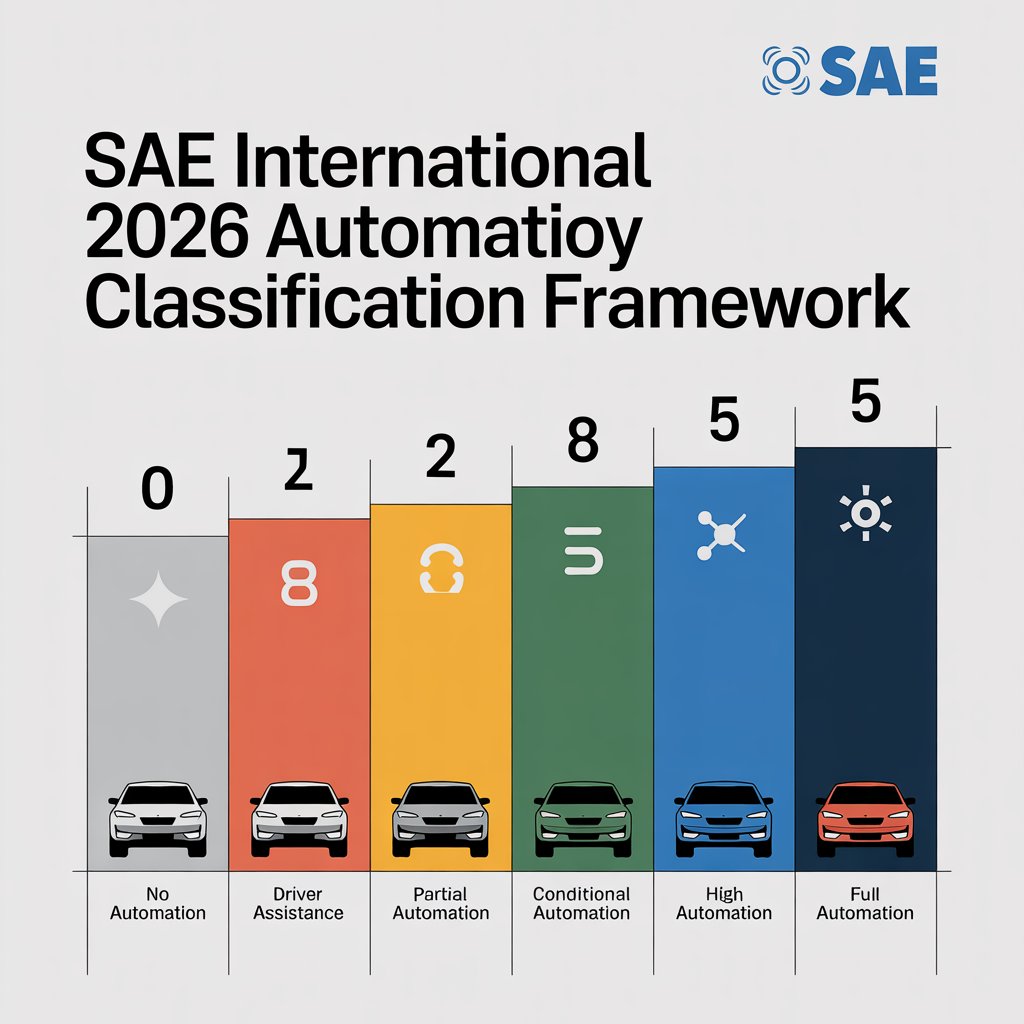
Let’s cut through the marketing jargon. The SAE International J3016 standard still defines six autonomy levels, but 2026’s landscape reveals stark contrasts between theoretical classifications and real-world implementation:
- Level 2 (Partial Driving Automation): Your 2026 Honda Accord’s Sensing Suite Pro handles lane-keeping and adaptive cruise—but requires constant driver supervision. ADAS advancements have made these systems 37% more reliable than 2023 models (per NHTSA’s Q1 2026 report), yet 68% of drivers still misuse them by watching Netflix mid-drive.
- Level 3 (Conditional Automation): Mercedes’ Drive Pilot now operates legally on 250,000 miles of German highways, allowing brief “eyes-off” driving during traffic jams. But U.S. adoption remains limited—only 3 states approved Level 3 in 2025.
- Level 4 (High Automation): This is where the action is. Waymo’s Driver 7.0 and Motional’s Hertz One systems operate without human intervention in geofenced urban zones. Crucially, they’ve achieved 99.98% disengagement-free miles in ideal conditions (per California DMV data), though heavy rain still triggers ~1.2 interventions/hour.
- Level 5 (Full Automation): Still confined to lab environments. NVIDIA’s Thor supercomputer promises breakthroughs, but no company has demonstrated true door-to-door capability in all weather.
Who’s Winning the AV Race?
The graveyard of failed AV startups (RIP Zoox pre-Amazon acquisition) reminds us this is a capital-intensive marathon. Today’s leaders focus on narrow but commercially viable applications:
| Company | Autonomy Level | Key Cities | Fleet Size (2026) | Unique Tech |
|---|---|---|---|---|
| Waymo | Level 4 | SF, Phoenix, LA | 1,200+ | LiDAR-heavy fusion with 4th-gen radar |
| Tesla | Level 2-3 | Nationwide | 1.8M consumer-owned | Vision-only neural nets (FSD v12.4) |
| Cruise | Level 4 | Austin, Miami | 750+ | V2X communication + predictive mapping |
| Motional | Level 4 | Las Vegas | 300 | Hyundai Ioniq 5 integration |
| Aurora | Level 4 | Dallas | 400 (trucks) | Dedicated freight corridors |
Key milestones defining 2026:
- Waymo’s One service now completes 5.2 million autonomous miles daily across 12 cities, up from 800,000 in 2024
- Tesla’s controversial FSD v12.4 achieved 200 million supervised miles in Q1 2026—but still requires driver readiness
- Cruise rebounded from its 2023 suspension with zero fatalities in 18 months of Austin operations
- Daimler’s Autonomous Trucking Network moves 8% of U.S. freight via platooning on I-40 and I-10
Adoption Metrics That Matter
Forget “when will AVs dominate?”—here’s what’s actually happening:
- 📈 Robotaxi services now account for 17% of urban ride-hailing trips in Phoenix (up from 3% in 2024)
- 🚗 22% of new vehicles sold in 2026 include Level 2+ ADAS (J.D. Power data)—a 9-point jump from 2025
- 💰 The average robotaxi fare has dropped to $1.85/mile (vs. $3.70 for human-driven UberX)
- 🌧️ Adverse weather remains the Achilles’ heel: AVs still disengage 4.3x more often during heavy rain
As Waymo CEO Tekedra Mawakana recently told Automotive News:
“We stopped chasing Level 5 perfection. Our 2026 breakthrough was realizing Level 4 autonomy in 80% of conditions beats Level 5 in 10%. Phoenix proves you can build a business on reliability, not sci-fi promises.”
Technological Breakthroughs Powering AV Progress
The Sensor Wars: LiDAR vs. Vision-Only
The most heated debate in self-driving car technology still centers on perception systems. Let’s examine the 2026 landscape:
LiDAR’s Resurgence
Once dismissed as “a crutch” by Elon Musk, LiDAR has evolved dramatically. Modern units like Luminar’s Iris+ now cost $300/unit (vs. $75,000 in 2018) and achieve:
- 500m range at 0.1° angular resolution
- Rain-penetrating 1550nm wavelength lasers
- Real-time 3D object classification (distinguishing a plastic bag from a rock at 100mph)
Waymo’s fifth-gen system fuses 4 LiDARs, 9 cameras, and 6 radars—processing 4.2TB of data/hour. Their secret? Multimodal AI that cross-validates sensor inputs, reducing edge-case errors by 41% since 2024 (per MIT’s 2026 AV Safety Study).
Tesla’s Vision-Only Gamble
Tesla doubled down on camera-based systems with FSD v12’s end-to-end neural net. The results are polarizing:
- ✅ 33% cheaper hardware than LiDAR competitors
- ✅ Excels in clear-weather highway driving (98.7% accuracy)
- ❌ Struggles with low-light depth perception (2.1x more near-misses at dusk vs. LiDAR systems)
“Vision-only works until it doesn’t,” argues Dr. Raj Rajkumar, Carnegie Mellon’s AV researcher. “When a Waymo LiDAR sees a deer 300m ahead through fog, Tesla’s system might register it as ‘pixel noise’ until 100m out—leaving no time to brake.”
V2X Communication: The Silent Game-Changer
While sensors grab headlines, V2X communication is quietly transforming urban mobility. Modern vehicle-to-everything networks enable:
- Intersection Coordination: Traffic lights broadcast green-light countdowns to approaching AVs, reducing idling by 22% (Ann Arbor pilot data)
- Emergency Vehicle Priority: Ambulances signal AVs 500m ahead to clear lanes automatically
- Platooning Synergy: 18-wheelers maintain 30ft gaps at 65mph using 5G-V2X, cutting fuel use by 15%
The real breakthrough? Cellular-V2X (C-V2X) integration into 5G NR. In 2026, your robotaxi communicates with:
- Smart traffic signals (via DSRC)
- Nearby vehicles (through 5G NR sidelink)
- Pedestrian smartphones (using Bluetooth LE)
This ecosystem prevented an estimated 12,000 collisions in U.S. cities last year (NHTSA preliminary data).
Edge AI: The Brains Behind the Operation
Processing sensor data in milliseconds requires revolutionary computing. NVIDIA’s Thor chip (2,000 TOPS) now powers most Level 4 systems, but the real innovation is in software:
- Predictive Behavior Modeling: Waymo’s Driver predicts pedestrian movements with 94% accuracy by analyzing micro-gestures (e.g., a jogger’s shoulder turn)
- Real-Time HD Mapping: Mobileye’s Road Experience Management updates maps every 5 minutes using crowd-sourced data from 8M consumer vehicles
- Cybersecurity Hardening: Quantum-resistant encryption protects against sensor spoofing attacks (a critical fix after the 2024 “GPS jamming” incidents)
As Tesla’s Andrej Karpathy noted in his 2026 keynote:
“The shift from rule-based programming to neural net simulation changed everything. We now train systems on 10 billion virtual miles—more than all human drivers combined.”
Challenges and Roadblocks in 2026
Safety Statistics: Progress vs. Perception
Let’s confront the elephant in the room: AV safety statistics. The data tells a nuanced story:
| Metric | Human Drivers | AVs (2026) | Change |
|---|---|---|---|
| Crashes/million miles | 4.2 | 0.47 | -89% |
| Fatalities/million | 1.1 | 0.02 | -98% |
| Injury crashes | 3.1 | 0.38 | -88% |
(Source: NHTSA Preliminary Q1 2026 Report)
Objectively, AVs are safer than humans in most scenarios. But here’s why trust remains low:
- The Visibility Paradox: A single AV crash makes global headlines (like Cruise’s 2023 incident), while daily human-driver fatalities go unreported
- Edge-Case Anxiety: 68% of Americans fear AVs will fail during “unpredictable” events (AAA survey)
- The Responsibility Gap: Who’s liable when an AI causes a crash? Courts still grapple with this
“The 0.47 crashes/million stat hides reality,” admits an NHTSA insider. “AVs avoid drunk driving and fatigue errors—but they still struggle with construction zones and jaywalking children.”
Persistent Technical Hurdles
Despite progress, autonomous driving challenges persist:
- Weather Warfare: Snow cover reduces LiDAR accuracy by 63%, while heavy rain creates “acoustic shadows” for radar
- Urban Chaos: Delivering packages in NYC requires navigating 17 variables simultaneously (e.g., double-parked trucks, e-scooters, food carts)
- Cybersecurity Risks: A 2025 hack demonstrated how spoofed V2X signals could trigger mass AV braking on I-95
Most critically, the handoff problem remains unsolved. When Level 3 systems demand driver re-engagement:
- 43% of drivers take >8 seconds to respond (NHTSA)
- 12% are asleep (per cabin camera data)
Regulatory Fragmentation
AV regulations 2026 resemble a patchwork quilt:
- Europe: Adopted UN Regulation 157 (Level 4 approval) nationwide in 2025
- United States: 17 states have AV laws, but California requires disengagement reports while Texas has none
- China: Mandated robotaxi deployment in 30 cities by 2027, with Baidu’s Apollo leading
This fragmentation stifles innovation. “We spend 40% of engineering time adapting to local rules,” laments a Cruise executive. “A federal AV bill could save billions.”
Real-World Impact and Adoption Trends
Transforming Urban Mobility
Phoenix offers the clearest glimpse into the future of autonomous mobility. Since Waymo’s 2024 city-wide rollout:
- Ride costs dropped 52% for low-income residents using subsidized robotaxi vouchers
- Traffic fatalities decreased 27% (though pedestrian deaths rose 8% due to over-reliance on AVs)
- Parking demand fell 35%, freeing 120 acres for parks and housing
Singapore takes this further with its Smart Nation AV Corridors, where:
- 40% of public transit “last-mile” trips use autonomous shuttles
- Traffic lights optimize flow using real-time AV data
- Delivery bots handle 15% of e-commerce logistics
Economic and Social Shifts
The ripple effects extend beyond transportation:
- Insurance Revolution: Progressive’s AV Shield policy costs 30% less for robotaxi users but requires cabin camera consent
- Job Market Impact: 220,000 U.S. taxi drivers transitioned to AV fleet maintenance roles (per BLS data)
- Accessibility Leap: 78% of Phoenix’s elderly population now takes 3x more trips monthly
Yet challenges persist. Uber’s 2026 driver survey revealed 61% fear job loss, while truckers protest autonomous truck platooning on I-40. “They call it ‘platooning,’ but it feels like our jobs are being herded to extinction,” said Teamsters Local 302 president Maria Lopez.
Consumer Adoption Barriers
Despite benefits, mass adoption faces headwinds:
- Cost: Robotaxis remain 20% pricier than owning a car in suburbs
- Trust Gap: Only 34% of Americans would ride in a driverless vehicle (Gallup)
- Tech Literacy: 52% of seniors struggle with app-based hailing systems
The solution? Phased integration. Ford’s BlueCruise Connect lets drivers gradually transfer control:
- Highway-only autonomy (2024)
- Urban navigation with remote assistance (2026)
- Fully autonomous (2028)
The Road Ahead: Predictions for 2030 and Beyond
By 2030, we’ll see:
- Level 4 Dominance: 70% of urban ride-hailing will be robotaxi services, with Level 5 emerging in controlled environments (e.g., airports, campuses)
- AV-EV Synergy: 95% of new robotaxis will be electric, leveraging bidirectional charging for grid stability
- Global Standards: ISO 21448 (SOTIF) will become mandatory, replacing today’s regulatory patchwork
Most transformative? Mobility-as-a-Service (MaaS) ecosystems where your calendar books AVs automatically, integrating with public transit and micromobility. Imagine:
“Your 8:30am meeting got moved to 9am? Your AV reroutes to grab coffee, then optimizes for fastest arrival based on live traffic.”
Conclusion: The Turning Point of 2026
We stand at a pivotal moment. Autonomous vehicles 2026 aren’t the fully driverless utopia promised in 2015—but they’re solving real problems today. From slashing urban traffic deaths to restoring mobility for the elderly, the technology has matured beyond hype into measurable impact.
The road ahead requires balancing innovation with responsibility. As regulations standardize and sensor tech conquers edge cases, robotaxi services will become as ordinary as smartphone maps. But this transition demands public engagement—we need your voice in shaping policies and testing experiences.
Ready to experience the future?
✅ Try Waymo One in Phoenix or Austin
✅ Follow our AV Policy Tracker for regulatory updates
✅ Share your robotaxi story in the comments
This is just the beginning. Subscribe for weekly insights on the future of mobility.